
What to See Inside Sagrada Familia: 9 Things Not to Miss
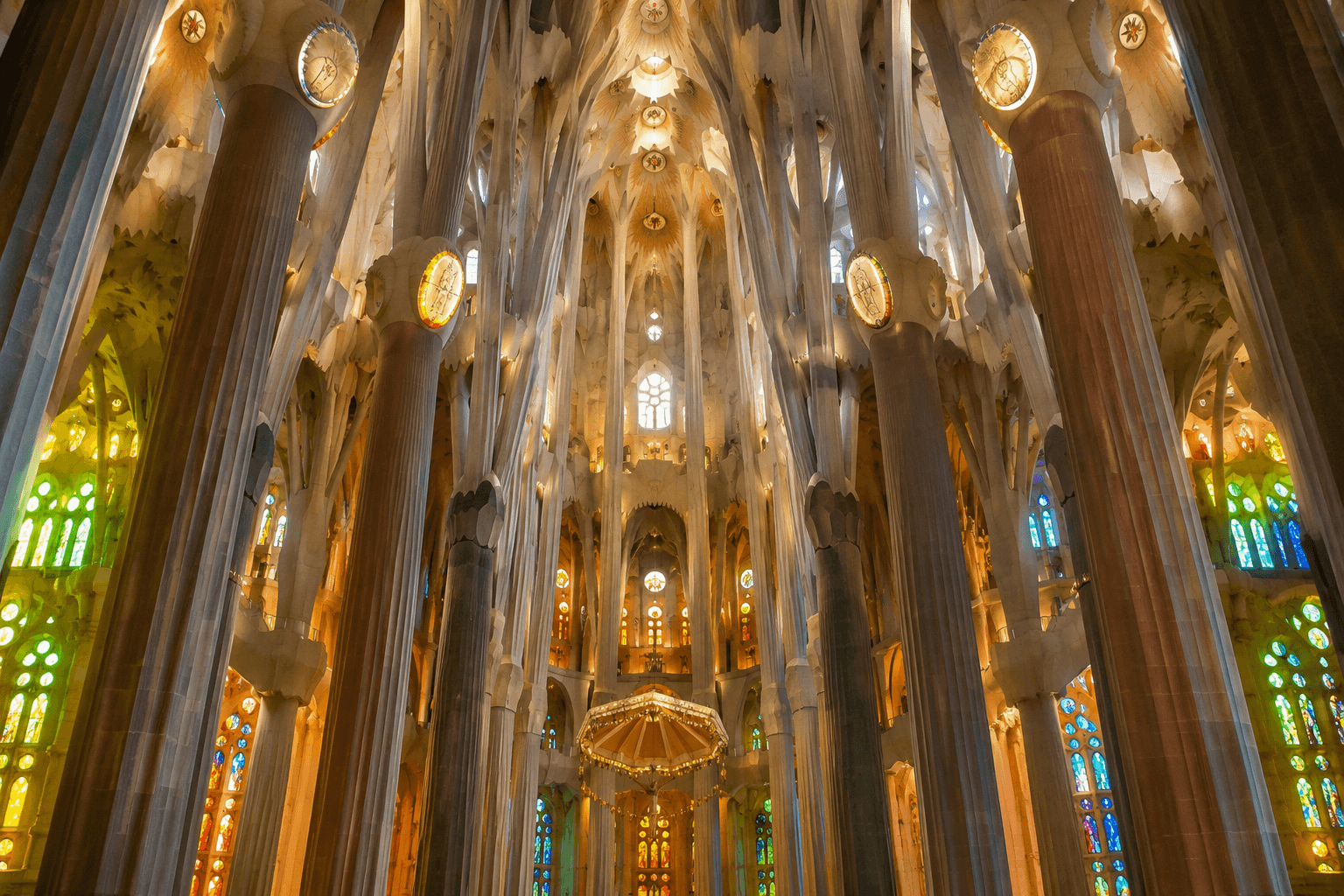
The most important things to see inside Sagrada Familia are its tree-like columns, soaring geometric ceiling, stained-glass windows, central altar and apse, changing natural light, architectural…
In This Guide
- Quick Answer
- Sagrada Familia Interior: What to Look For
- 1. The Forest-Like Columns
- 2. The Stained-Glass Windows
- 3. The Ceiling and Vaults
- 4. The Central Altar and Apse
- 5. Watch How the Light Changes the Architecture
- 6. Look at the Columns More Closely
- 7. Look for the Symbolism, Not Just the Architecture
- 8. Don't Skip the Sagrada Familia Museum
- 9. Slow Down for the Details Most Visitors Walk Past
- Can You See the Nativity and Passion Façades From Inside?
- How Long Do You Need Inside Sagrada Familia?
- Is a Guided Tour Worth It for the Interior?
- What Should First-Time Visitors Prioritize?
- Frequently Asked Questions
- See More Than the Architecture
Quick Answer
Look Beyond the Scale — These Are the Details That Make the Interior Extraordinary.
The most important things to see inside Sagrada Familia are its tree-like columns, soaring geometric ceiling, stained-glass windows, central altar and apse, changing natural light, architectural symbolism and museum.
The exterior may be what first makes Barcelona's Sagrada Família recognizable, but the interior is where Antoni Gaudí's architectural ideas become much easier to understand.
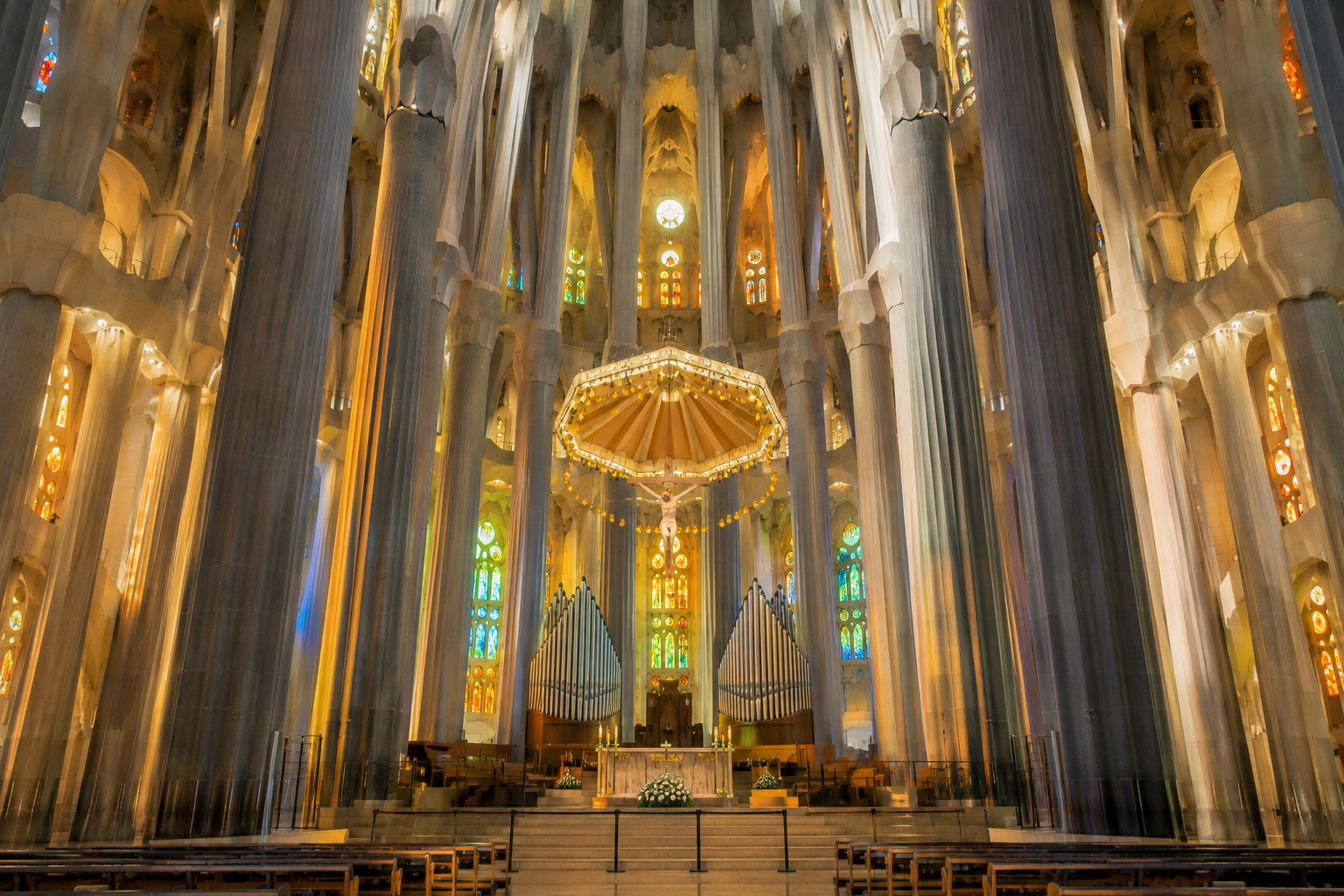
Instead of designing the nave like a conventional stone church, Gaudí created a space inspired heavily by nature, geometry and light. Columns branch overhead like trees, coloured sunlight moves across the stone, and structural elements become part of the decoration.
The official Basilica describes Gaudí's intention for the interior light as harmonious and designed to encourage contemplation.
If you're visiting for the first time, these are the details we'd make sure you don't miss.
Sagrada Familia Interior: What to Look For
Don't Miss | Why It's Special |
|---|---|
Forest-like columns | Gaudí transforms structural columns into branching forms |
Stained glass | Different sides of the Basilica produce dramatically different colours |
Ceiling and vaults | Geometry creates one of the interior's most striking views |
Central altar | The spiritual and visual centre of the Basilica |
Natural light | The interior changes according to the time of day |
Column materials | Different stones help support different structural loads |
Interior symbolism | Religious and natural references appear throughout |
Museum | Explains Gaudí's design and construction process |
Small details | Easy-to-miss features reveal how carefully the building was conceived |
If you have limited time
Prioritize the columns, ceiling, stained glass and altar.
Those four features give you the clearest introduction to what makes the Sagrada Família interior different from almost any other church.
1. The Forest-Like Columns
The columns are probably the single most important architectural feature to understand inside Sagrada Família.
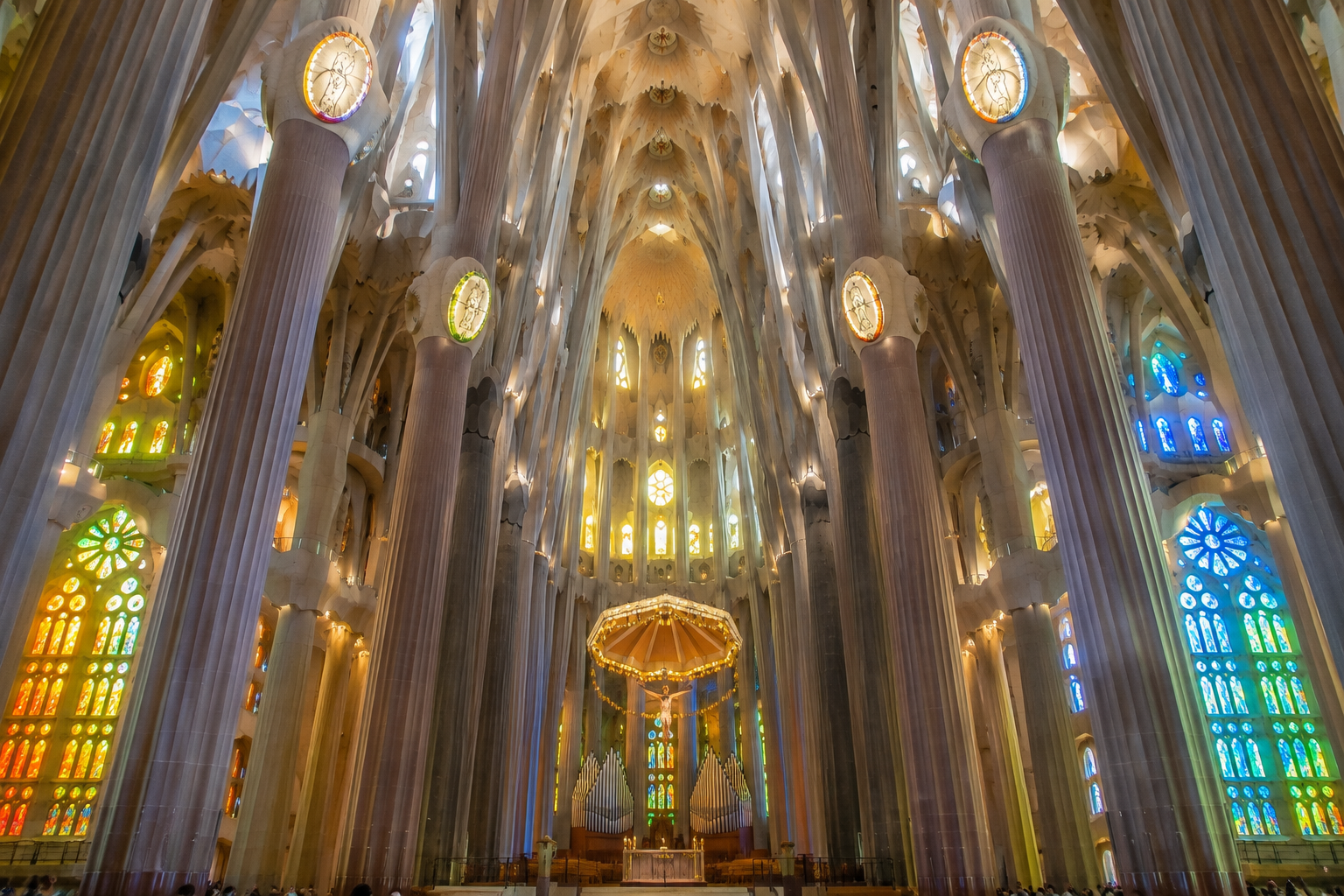
When you first enter the nave, don't immediately start walking.
Look up.
Instead of traditional vertical pillars ending beneath a ceiling, Gaudí's columns rise and branch into multiple sections, helping distribute the structural loads above.
The effect is deliberate.
Standing in the nave can feel like standing beneath a canopy of enormous stone trees.
But this isn't decoration placed over conventional engineering. The branching forms are part of the building's structural system.
Look carefully as you move around the interior and you'll also notice that the columns don't all look identical. Different materials and dimensions are used according to the loads they carry.
This is one of the details that makes a guided explanation particularly useful: something that initially looks purely artistic is also engineering.
2. The Stained-Glass Windows
If the columns create the structure of Gaudí's interior, light gives it life.
The stained glass was designed by artist Joan Vila-Grau, following principles established for the Basilica's interior.
One of the most beautiful details is the contrast between the two sides.
On the Nativity side, the windows use cooler blue and green tones associated with morning light.
On the opposite Passion side, warmer reds, oranges and yellows interact with the afternoon and evening sun.
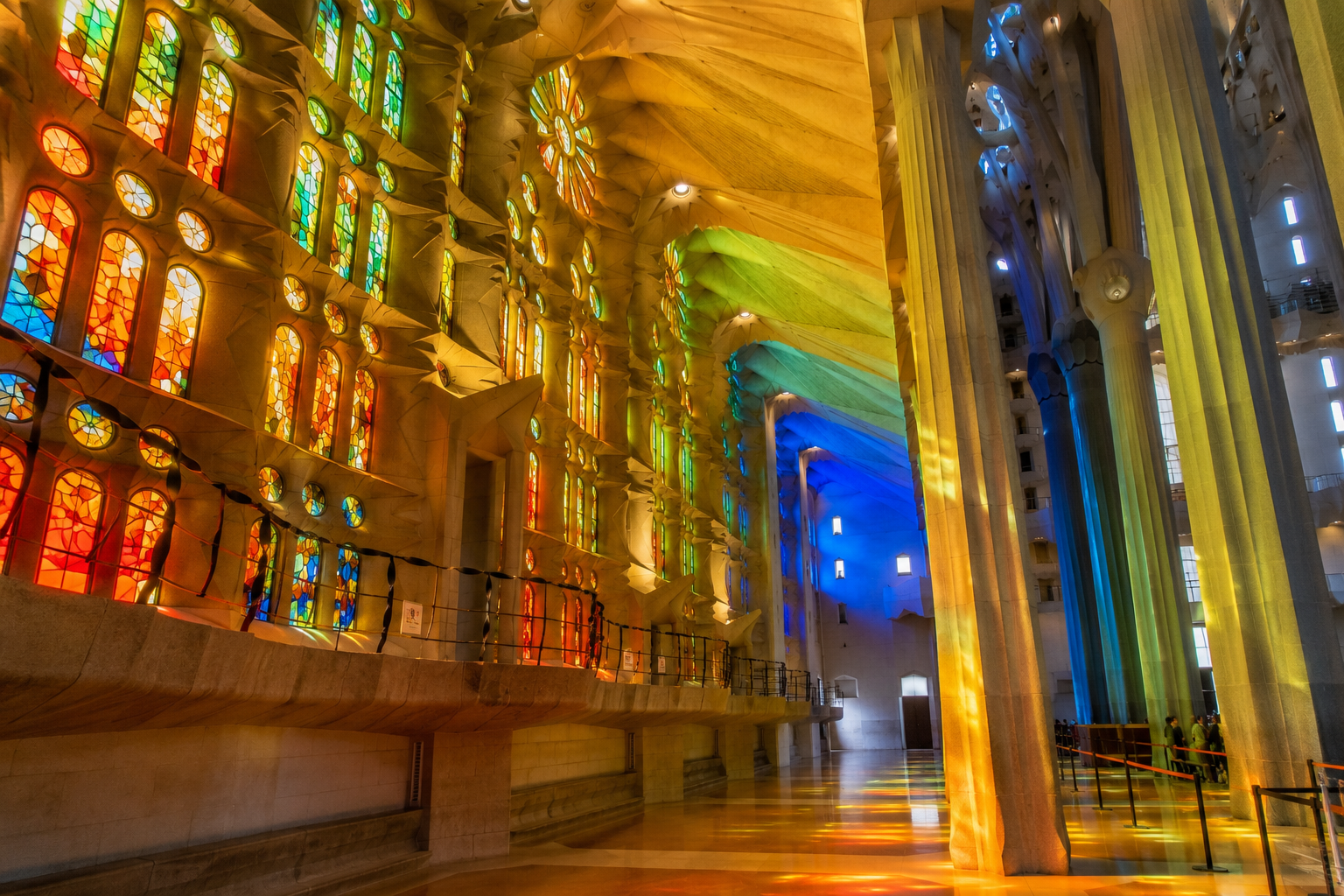
The official Sagrada Família interior guide explains that the Nativity-side glass has bluer tones corresponding to morning light, while the western side becomes more orange in character.
This means the interior doesn't look exactly the same throughout the day.
At certain times, coloured light spills across the columns and floor rather than simply remaining inside the windows.
Don't just photograph the stained glass itself.
Turn around and look at what the light is doing to the rest of the Basilica.
That's often the more memorable view.
For a deeper comparison of morning and afternoon light, see our Best Time to Visit Sagrada Familia guide.
3. The Ceiling and Vaults
One of the easiest mistakes at Sagrada Família is spending too much time looking straight ahead.
Some of the most extraordinary architecture is directly above you.
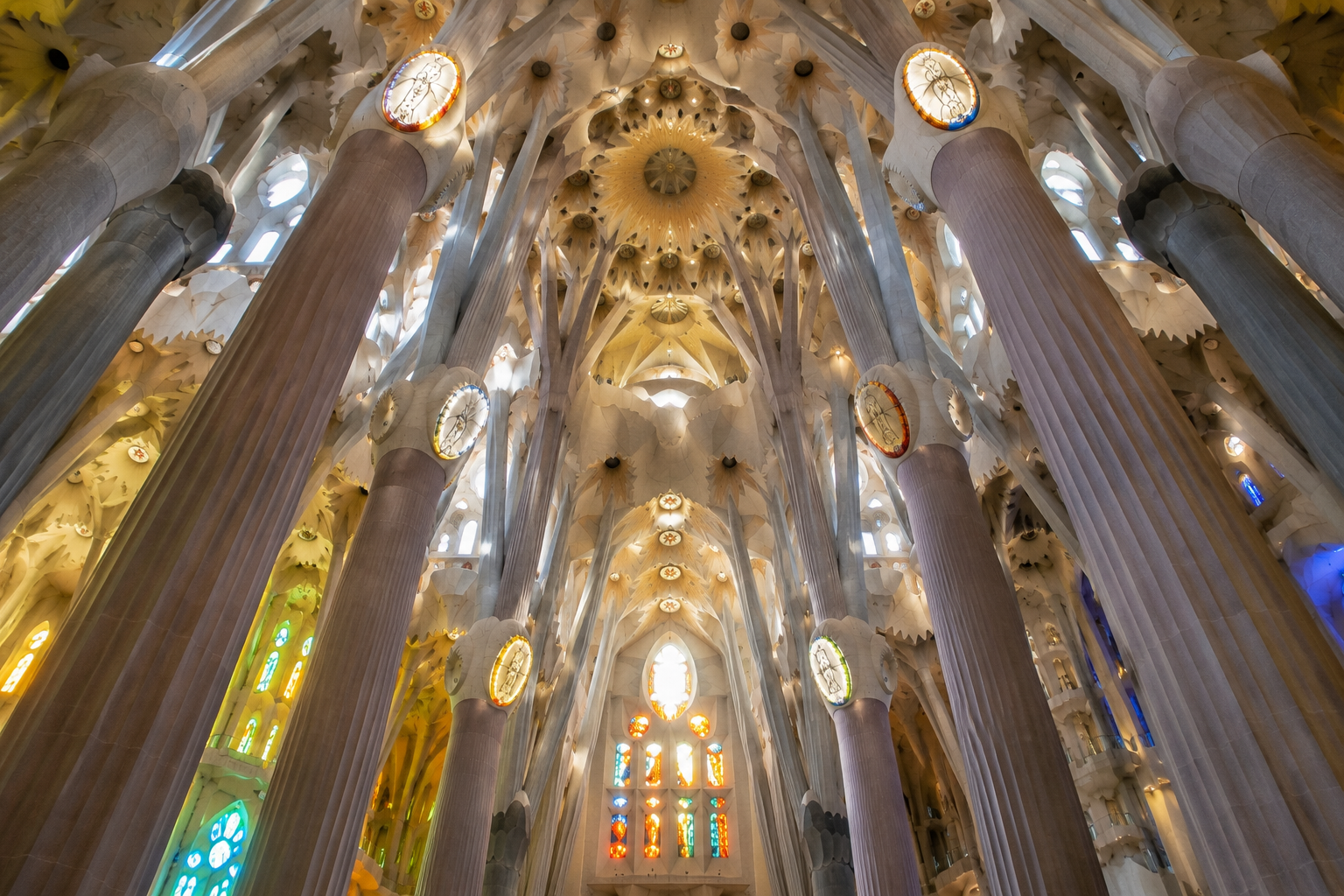
The branching columns meet an elaborate system of vaults filled with geometric forms, creating the impression of a stone canopy.
The ceiling is especially impressive from around the central nave and crossing, where you can appreciate how the columns divide and connect with the structure overhead.
Instead of relying on the traditional Gothic system of external flying buttresses, Gaudí developed a structural language in which forces could be transferred through the branching columns.
You don't need to understand the mathematics to appreciate it.
But once you know the ceiling isn't simply decorative, the view becomes considerably more interesting.
Photography tip
For one of the classic interior photographs, stand around the central nave and point the camera almost directly upward.
The symmetry of the columns and vaults becomes much easier to see.
4. The Central Altar and Apse
After the enormous scale of the nave, the central altar can initially seem surprisingly restrained.
That's worth noticing.
The altar sits beneath a suspended baldachin, with a crucifix above it, creating the spiritual focal point of the Basilica.
Behind it is the apse, where architecture, sculpture and religious symbolism come together.
Don't rush through this area simply because the stained glass is more visually dramatic.
Take a moment to step farther back.
From a distance, you can see how the altar sits within the wider composition of the columns, vaults and light.
The Sagrada Família wasn't designed simply as an architectural monument.
It is a functioning basilica, and the interior architecture ultimately leads toward this liturgical centre.
5. Watch How the Light Changes the Architecture
The stained glass deserves its own section, but light itself is one of the things you should see.
Gaudí did not treat windows merely as openings in the walls.
The architecture was designed to bring natural light into the Basilica in a controlled way.
According to the official interior documentation, Gaudí wanted the light to be harmonious and the stained glass to become more transparent higher in the building.
The result is particularly noticeable when sunlight is strong.
Blue, green, orange and red tones can appear across:
columns
floors
walls
and even
other visitors.
This is one reason two people visiting Sagrada Família at different times can come away with noticeably different photographs.
If photography is important to you, our Best Time to Visit Sagrada Familia guide explains when different sides of the interior receive the strongest coloured light.
6. Look at the Columns More Closely
Once you've appreciated the overall “forest,” look at individual columns.
You'll notice differences in:
colour
stone
thickness
and
geometry.
These aren't random variations.
Columns carrying greater structural loads use stronger materials, while their shapes transform as they rise before branching into the vaults.
This is a good example of why Sagrada Família rewards slow observation.
From ten metres away, you see a beautiful column.
With some context, you begin to see how the building actually stands up.
7. Look for the Symbolism, Not Just the Architecture
Sagrada Família is full of symbolism.
And this is probably the part independent visitors are most likely to miss.
Gaudí's design connects architecture with:
Christian theology
nature
light
geometry
and
the story of Christ.
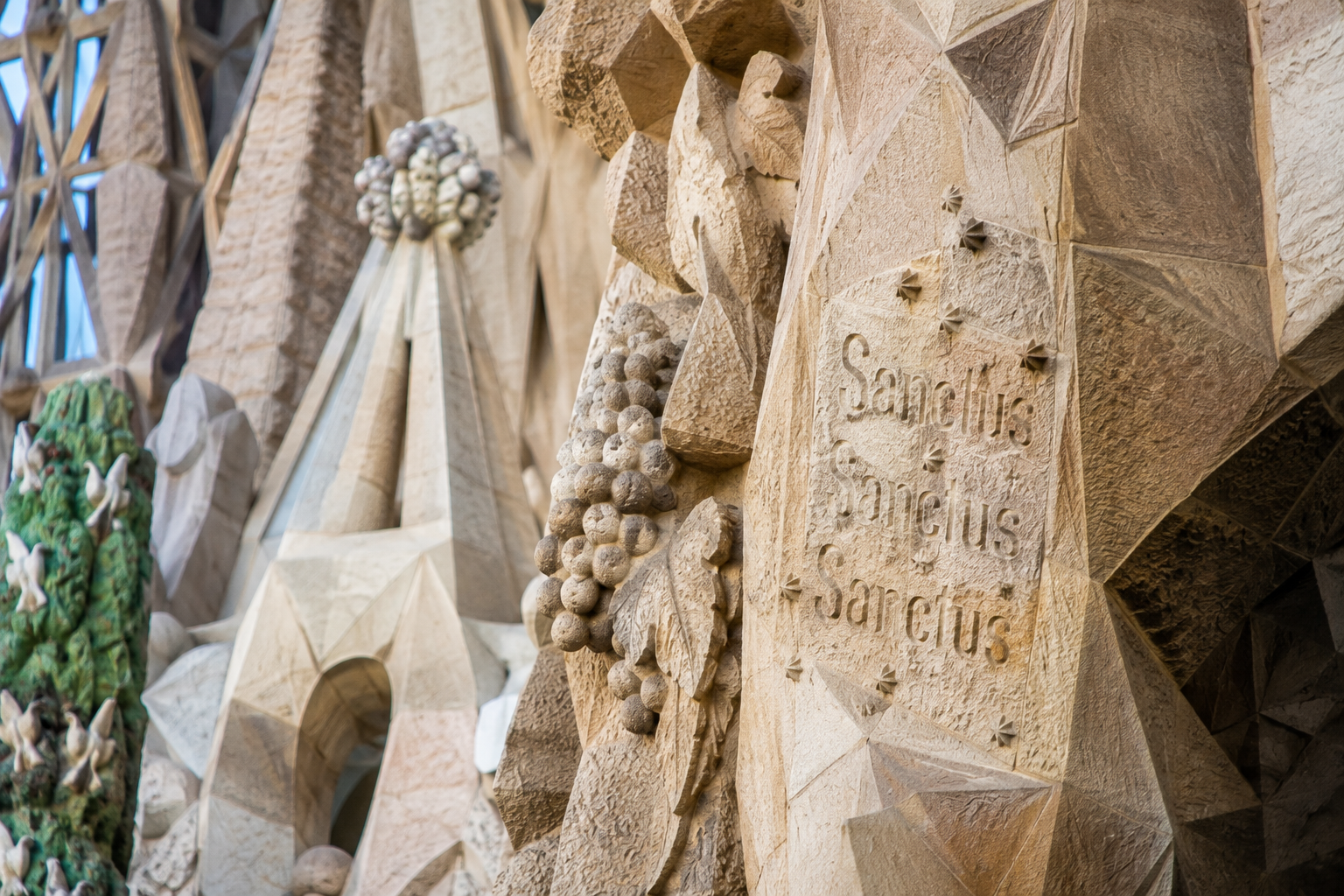
Even inscriptions, numbers, plants and architectural forms can have meaning beyond decoration.
You don't need to identify every symbol to enjoy the Basilica.
But understanding a few of them changes the experience from:
“This is beautiful.”
to:
“Now I understand why this was designed this way.”
This is where a knowledgeable guide adds the most value.
A guide isn't necessary to see the columns or stained glass. The benefit is understanding why they look the way they do and how individual details connect to Gaudí's larger design.
If you're deciding between visiting independently and taking a tour, see our Sagrada Família Guided Tour vs Self-Guided comparison.
8. Don't Skip the Sagrada Familia Museum
After seeing the Basilica itself, it's tempting to leave immediately.
We wouldn't.
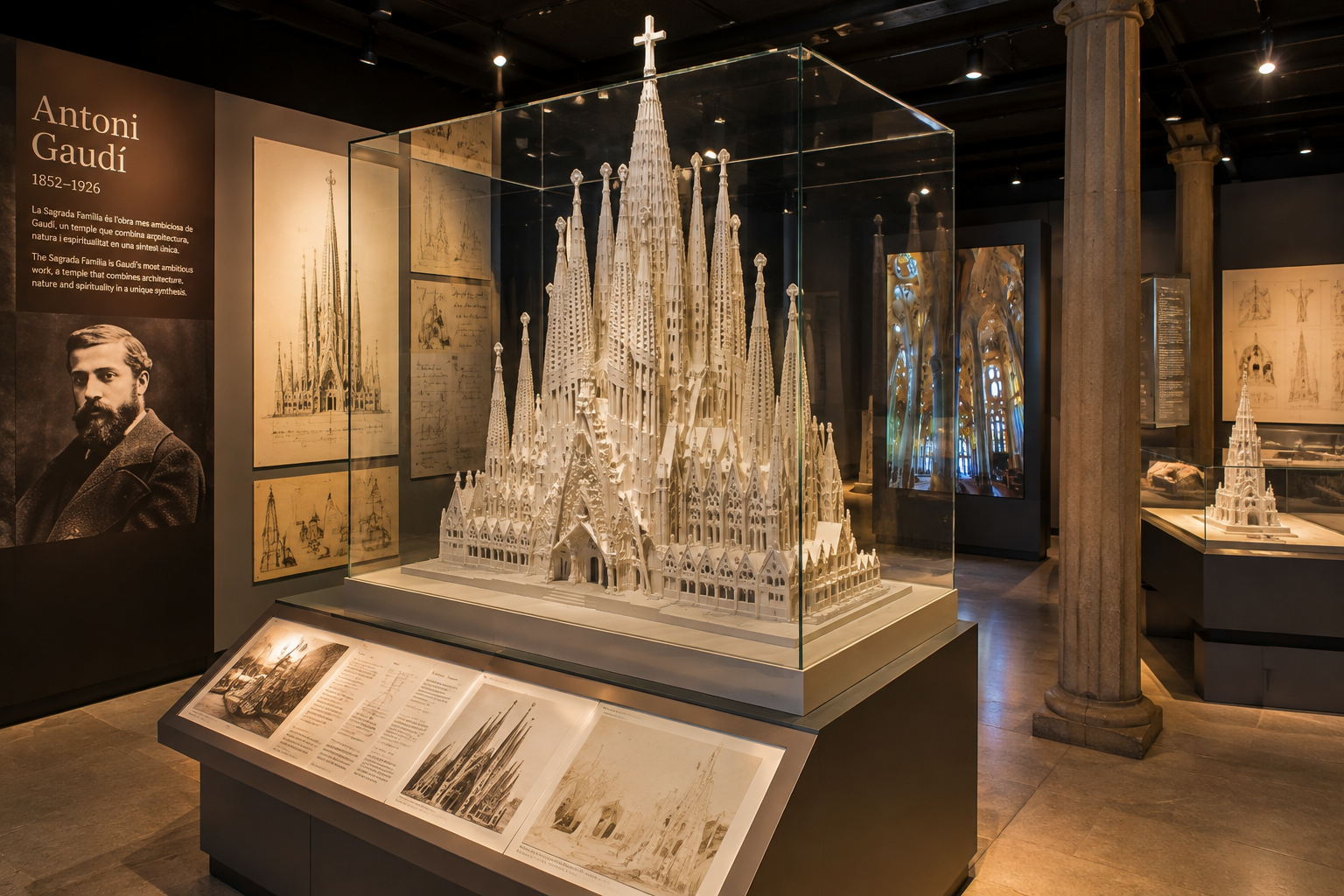
The museum provides context that is difficult to absorb simply by standing in the nave.
Sagrada Família's museum was established in 1961 to explain the historical, technical, artistic and symbolic aspects of the Temple.
Depending on the displays available during your visit, you can learn more about:
Gaudí's architectural process
construction techniques
models
the Basilica's development
and
the ideas behind its unusual geometry.
This is particularly worthwhile if you're interested in architecture.
For most visitors, you don't need to spend an hour here.
Around 20–30 minutes is a reasonable amount of time, which is also consistent with the planning advice in our existing duration guide.
9. Slow Down for the Details Most Visitors Walk Past
Sagrada Família creates an unusual problem:
The building is so spectacular that it's easy to miss the small things.
Visitors naturally look at the enormous columns, coloured windows and ceiling.
But try spending a few minutes deliberately looking at smaller details.
Notice:
how a column changes shape as it rises
inscriptions within the architecture
the transition between different stone materials
the geometric openings above
religious symbols
and
how natural forms are translated into stone.
You don't need a checklist of 50 hidden details.
The point is to stop occasionally and look closely.
Sagrada Família rewards that far more than rushing around trying to photograph everything.
Can You See the Nativity and Passion Façades From Inside?
Yes, but remember that the façades are primarily exterior architectural works.
The Nativity Façade and Passion Façade represent dramatically different artistic approaches and different parts of the story of Christ.
We would absolutely see both from outside as part of the same visit.
And if your ticket includes tower access, you'll need to choose which tower experience you want.
We've already compared those options in our Sagrada Familia Nativity vs Passion Tower guide.
How Long Do You Need Inside Sagrada Familia?
For most first-time visitors, we'd allow approximately 1.5–2 hours for the overall Sagrada Família experience rather than trying to rush through it.
A quicker visit is possible, but giving yourself more time lets you:
see the interior properly, study the stained glass, photograph the ceiling, look at the façades and visit the museum.
Our complete How Long Do You Need at Sagrada Familia? guide breaks this down by self-guided visits, guided tours, museum visits and tower tickets.
The official visit products can have shorter approximate durations, but for itinerary planning we prefer leaving extra time rather than scheduling your next Barcelona attraction immediately afterward.
Is a Guided Tour Worth It for the Interior?
If you mainly want to see the architecture, you can absolutely visit independently.
The columns, light and stained glass don't require explanation to be impressive.
But if you want to understand why Gaudí designed the Basilica this way, a guided tour becomes much more valuable.
A knowledgeable guide can explain:
why the columns branch
how Gaudí used geometry
what the façades represent
how light contributes to the design
the symbolism hidden throughout the Basilica
and
how construction continued after Gaudí's death.
That's the difference.
You're not paying someone to point at the stained glass and tell you it's colourful.
You're paying for the context connecting everything together.
If you're still unsure, read our guide to whether a Sagrada Família guided tour is worth it before choosing your ticket.
What Should First-Time Visitors Prioritize?
If you don't want to walk around staring at a checklist, remember just five things:
Look up at the columns.
Look all the way up at the ceiling.
Compare the cool and warm stained glass.
Step back and see the altar within the whole nave.
Spend a little time in the museum before leaving.
Do those five things and you'll have experienced the most important elements of the Sagrada Família interior without turning your visit into a scavenger hunt.
Frequently Asked Questions
What is the most important thing to see inside Sagrada Familia?
The combination of the branching columns, geometric ceiling and stained-glass light is the defining interior experience. Don't look at these separately—notice how they work together.
Is the inside of Sagrada Familia worth seeing?
Absolutely. The interior is fundamentally different from the exterior and reveals Gaudí's use of structure, geometry, nature and light. Seeing only the façades means missing a major part of the building.
What colour is the stained glass inside Sagrada Familia?
The colours vary by side. The Nativity/eastern side features cooler blues and greens, while the western side uses warmer orange and red tones that interact strongly with afternoon light.
How long should I spend inside Sagrada Familia?
For the complete visit, we'd reserve around 1.5–2 hours for most first-time visitors. That provides time for the Basilica, photographs, façades and museum without rushing.
Can you take photos inside Sagrada Familia?
Visitors can generally take personal photographs, subject to the Basilica's current visitor rules. Always follow onsite instructions, particularly during services or special events.
Is there a museum inside Sagrada Familia?
Yes. The museum explains historical, technical, artistic and symbolic aspects of Sagrada Família and has existed since 1961.
Do you need a guide inside Sagrada Familia?
No, but a guide can help explain the architecture, engineering, symbolism and Gaudí's ideas behind features that are easy to admire without fully understanding.
See More Than the Architecture
Sagrada Família is impressive even when you know nothing about it.
But understanding why the columns resemble trees, why the light changes colour across the Basilica, how Gaudí used geometry and what the architectural details symbolize can completely change the visit.
If you want more than photographs, a guided visit can help connect those details into the larger story of Gaudí's unfinished masterpiece.